
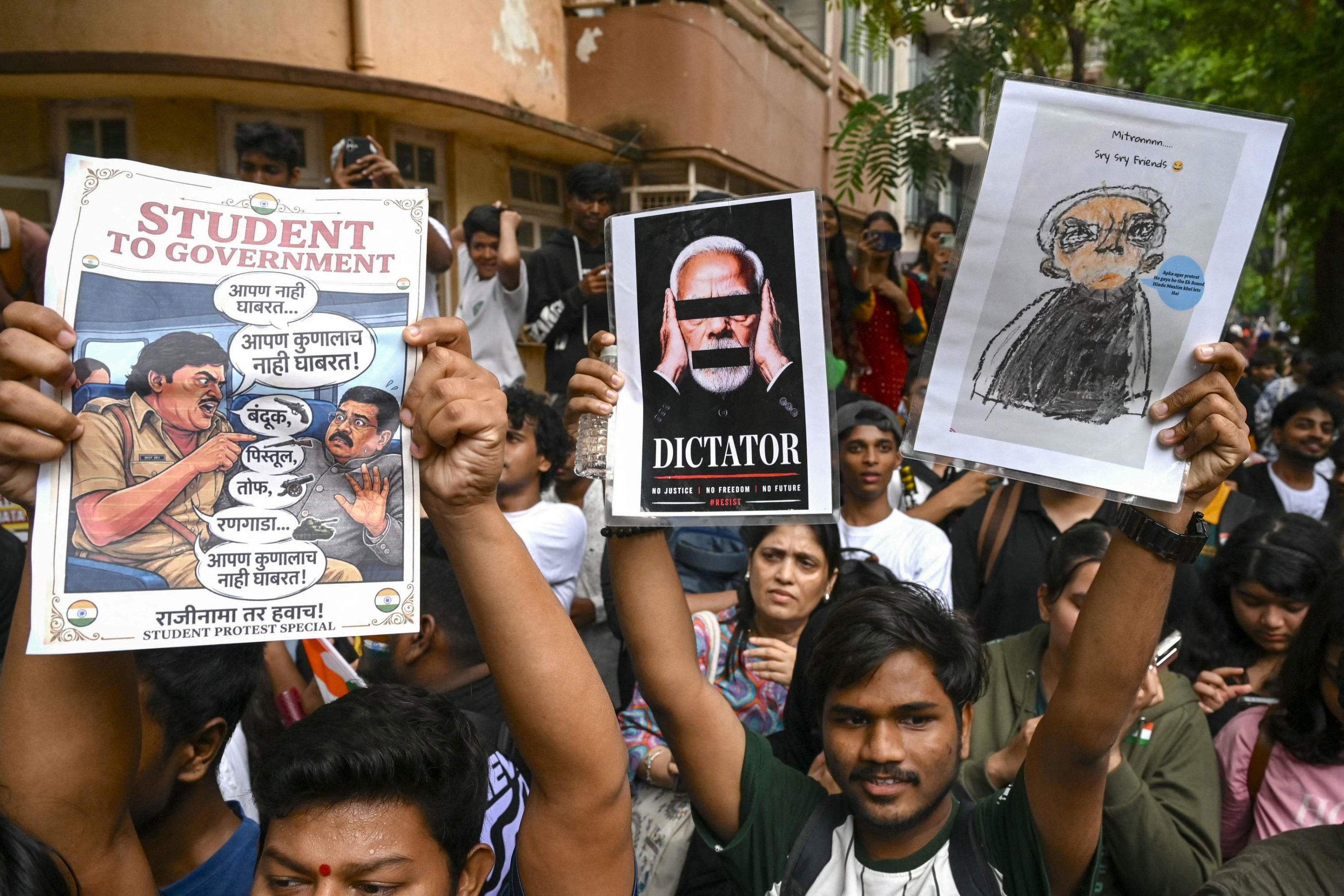
There was a time when protests were something you only saw on the evening news.
Someone’s parents were there. Someone’s grandparents marched. Someone carried a handwritten placard that never made it beyond the people physically standing around them. If you weren’t there, you simply heard about it later.
Today, a protest isn’t over until you’ve seen at least twenty Instagram Stories from it.
The signs are wittier. The outfits are planned. Friends coordinate meeting points in group chats. Someone inevitably brings a film camera. Someone else is already editing a Reel before they’ve even reached home. There are playlists made for the walk there, Pinterest boards for poster inspiration, TikTok tutorials on how to paint the “perfect” protest sign, and photo dumps titled “somewhere history was happening.”
Somewhere along the way, Gen Z didn’t just participate in protests.
They changed what protesting looked like online.
And before anyone misunderstands this conversation, this isn’t about whether the causes themselves matter. They absolutely do. Every generation has fought for something bigger than itself. What has changed is the culture around participation.
For Gen Z, showing up has become part activism, part identity, part community, and sometimes, if we’re honest, part social event.
It’s probably the coolest a protest has ever looked.
The interesting question isn’t why people are protesting.
It’s why everyone suddenly feels like they’re missing out if they aren’t there.
Because if you’ve spent even five minutes on Instagram after any large public demonstration, you’ll notice the pattern.
The photographs don’t just document a movement anymore. They document belonging.
Friends laughing while painting banners. Coffee runs before the march begins. Outfit checks. Group selfies. Emotional captions. Black-and-white film photos that somehow make everything feel more cinematic.
For a generation raised on social media, every important cultural moment automatically becomes both lived experience and digital memory.
If you weren’t there, the algorithm reminds you that everyone else was.
Psychologists have long spoken about FOMO, or the Fear of Missing Out, as one of social media’s defining emotional drivers. Originally, it applied to parties, concerts and holidays. Today, it extends into cultural participation itself. Seeing friends attend events that feel historically or socially significant creates a subtle pressure to participate, not necessarily because someone disagrees with staying home, but because nobody wants to feel absent from the conversations defining their generation.
In other words, FOMO has evolved.
It’s no longer just about missing fun.
It’s about missing relevance.
That doesn’t automatically make participation performative.
In fact, for many young people, social causes genuinely matter more than they did for previous generations. Gen Z has grown up surrounded by climate anxiety, conversations around mental health, gender equality, identity, education, economic uncertainty and digital transparency. They’re arguably the first generation to receive breaking news and personal opinions simultaneously, often within the same swipe.
Naturally, they want to be involved.
But social media changes how involvement looks.
Before Instagram, attending a protest ended when you reached home.
Now it continues for weeks through photo dumps, reflections, discussions, reposts and edits.
The event becomes part of your digital identity.
That’s something older generations never really experienced.
There’s also something beautifully human happening underneath all of this.
Most of Gen Z grew up hearing that young people were disengaged. That they spent too much time online. That nobody cared anymore.
Then suddenly thousands of young people began showing up together.
Not because someone forced them.
Because they wanted to.
Whether they’re discussing education, climate, gender, safety, healthcare or local community issues, there’s an undeniable emotional energy that comes from standing beside people who believe something should change.
Psychologists often describe collective action as emotionally regulating. Being surrounded by people sharing similar values creates a powerful sense of belonging, reducing feelings of helplessness and increasing optimism. Humans have always sought community during uncertainty. Protests simply become one modern version of that.
Maybe that’s why so many people describe these experiences as strangely hopeful despite difficult circumstances.
You’re no longer scrolling alone.
You’re standing together.
Still, the internet complicates everything.
Because every meaningful moment online eventually becomes content.
The same phone recording chants is also recording outfit details.
The same carousel showing powerful speeches also includes aesthetic coffee photos from earlier that morning.
The same caption discussing social awareness sits beside perfectly colour graded portraits.
That’s where criticism usually begins.
People ask whether activism has become aesthetic.
Whether social media has transformed serious issues into another trend cycle.
Whether people attend because they care or because everyone else is going.
The uncomfortable truth is that motivation has never been completely pure in any generation.
Some people have always joined movements because friends invited them.
Some because they genuinely believed.
Some because history was unfolding.
Some because they wanted to witness it.
Social media didn’t invent mixed motivations.
It simply made them visible.
Perhaps what feels different today is how quickly digital culture rewards participation.
Algorithms amplify visibility.
Stories disappear in twenty four hours.
Posts receive likes that quietly reinforce behaviour.
Suddenly attending feels socially valuable beyond the event itself.
And yet reducing every young person to “performative activism” feels equally unfair.
Many continue volunteering long after cameras disappear.
Many donate privately.
Many organise behind the scenes without ever appearing on anyone’s feed.
The internet tends to highlight the most photogenic version of reality because that’s what travels fastest.
Reality itself is usually far more layered.
There’s another reason protests resonate so strongly with Gen Z.
They’re one of the few remaining places where strangers willingly gather offline.
This generation spends enormous amounts of time communicating through screens. Friendships exist through group chats. Relationships begin through DMs. Work happens on laptops. Entertainment streams individually.
Physical community has become surprisingly rare.
Ironically, protests bring back something deeply analogue.
Walking together.
Talking to strangers.
Holding signs someone painted by hand.
Sharing water bottles.
Helping someone fix a broken banner.
Singing.
Laughing.
Listening.
For a generation constantly described as digitally isolated, those moments feel unusually real.
Maybe that’s partly why people remember them so vividly.
They’re not just attending a cause.
They’re experiencing community.
The aesthetic simply follows.
And perhaps that’s why these gatherings often feel culturally significant beyond politics.
They remind young people what collective energy actually feels like.
Not through comment sections.
Not through reposts.
Through physical presence.
Of course, every generation romanticises its defining moments.
Boomers had Woodstock.
Millennials had music festivals.
Gen Z has created an era where even civic participation carries cultural symbolism.
There’s almost a festival language surrounding modern demonstrations. Handmade typography. Vintage cameras. Tote bags. Comfortable trainers. Shared playlists. Film photography. Friends meeting afterwards for coffee to process the day.
It isn’t shallow.
It’s how culture naturally forms.
Communities have always developed visual identities.
Gen Z simply documents theirs better than anyone before them.
Perhaps the biggest misunderstanding is assuming humour somehow weakens seriousness.
If anything, Gen Z has mastered using humour as survival.
Their protest signs are clever because memes are their native language.
Their slogans spread because they’re instantly shareable.
Their jokes often carry surprisingly sharp observations underneath them.
Comedy has always been political, social and cultural.
Gen Z just happens to communicate through internet humour.
Looking back years from now, historians will probably study these moments differently than previous movements.
Not just because of what people stood for.
But because almost every participant documented the experience themselves.
Future generations won’t only read newspaper headlines.
They’ll watch TikToks.
Scroll Instagram carousels.
Listen to voice notes.
Read captions written on train rides home.
For the first time, an entire generation is archiving its emotional experience in real time.
Maybe that’s why these moments feel bigger than individual events.
They’re becoming part of Gen Z’s collective memory while they’re still happening.
So perhaps the conversation shouldn’t be whether protests have become “cool.”
Maybe they’ve simply become visible in ways they never were before.
Visibility naturally creates trends.
Trends create participation.
Participation creates conversations.
And conversations, hopefully, create change.
Because beneath every perfectly designed placard, every film photograph, every chaotic group selfie and every viral Reel is something surprisingly simple.
A generation that refuses to stay invisible.
The aesthetics may eventually change.
The social media platforms certainly will.
But the desire to belong to something larger than yourself?
That has never gone out of style.